Hunchback of Notre Dame
Lego project and book report
 May 27, 2025 · Scott Paul · 988 words
I finished my lego set today that I bought right after I visited Paris. I was reading inside the instruction book that Notre Dame was in bad shape after the French Revolution and a lot of Victor Hugo’s intention in this famous book was to put attention back on the monument and restore it.
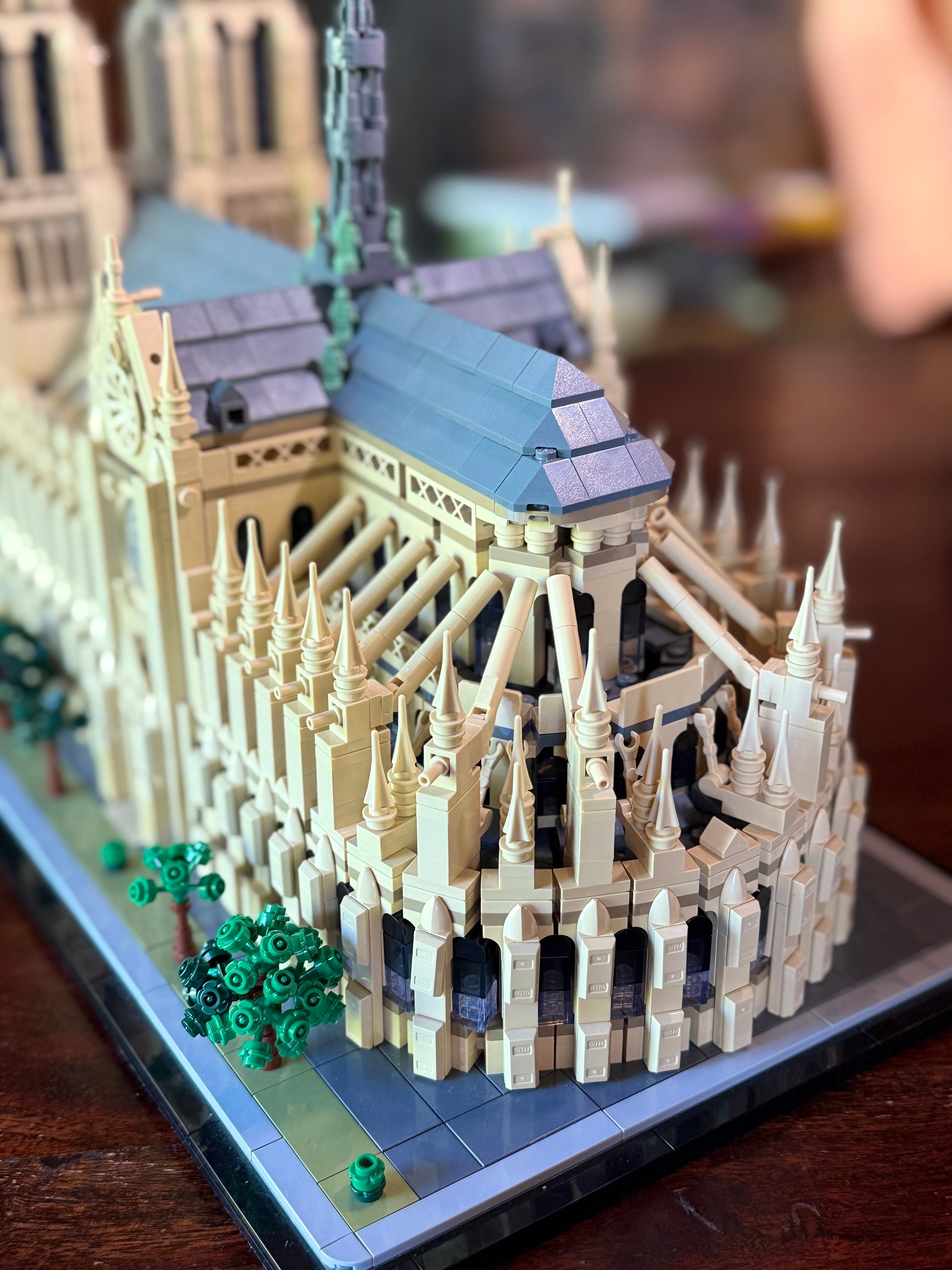
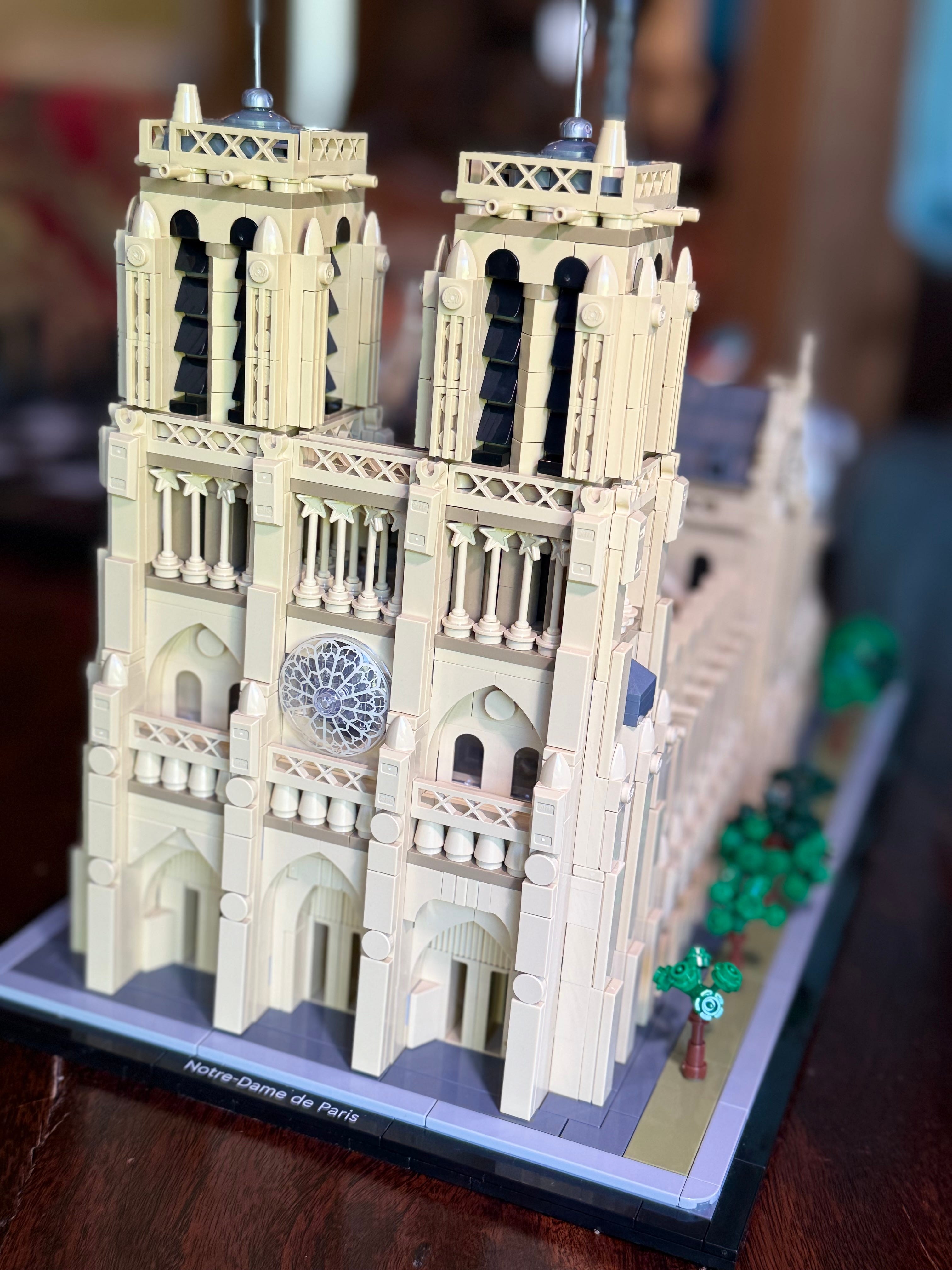
I was able to see it post fire reparations and it was in awe at how massive it is and most have been to the people observing it in 1300s when it was completed. It was the tallest building for hundreds of years in Paris before the Eiffel tower came along.
Now that I am done I am craving something to do that is as meditative for me as lego construction. I am going to Belfast next week and see the Titanic museum where I will probably end up buing that set next which is a big project.
I also figure I do a book report on a book that I don’t plan to read. Victor Hugo is obviously a great in literary history, but his books are long and my brain wasn’t wired to do long stuff. This is why I started book reports.
Happy 420 friends!
Scott X
📘 Book Report: The Hunchback of Notre-Dame by Victor Hugo
1. Context
Published in 1831, Victor Hugo’s The Hunchback of Notre-Dame (originally titled Notre-Dame de Paris) was written not just as a novel—but as a cry to preserve a cathedral. Paris was modernizing, and many Gothic buildings were being demolished. Hugo, romantic and radical, wanted to capture the splendor of the Notre-Dame Cathedral and immortalize it in fiction.
But this wasn’t just about stone and spires. Hugo wrapped his preservation campaign in a tragic, thunderous story about beauty, love, cruelty, and fate. Set in 15th-century Paris, the novel walks through alleys of misery and towers of glory, showing a world where the ugliest man has the kindest soul—and the most righteous man hides the blackest heart.
2. Deep Summary
The Bells and the Boy
In the great cathedral of Notre-Dame, the bells ring day and night—and no one rings them like Quasimodo. He’s the bell-ringer. Deaf from the thunder of bronze. Twisted of body but powerful in form. He’s mocked, feared, and hidden from the world.
Adopted and raised by Claude Frollo, the archdeacon of Notre-Dame, Quasimodo lives a life of isolation. Frollo sees himself as a man of God, but inside, he’s burning with pride, control, and forbidden desires.
Enter Esmeralda.
Esmeralda, the Dancer
She’s young, beautiful, and free-spirited. A Romani street dancer who captivates everyone with her grace—including Captain Phoebus (a vain soldier), Frollo (a repressed priest), and Quasimodo (a wounded soul).
Esmeralda’s charm is innocent, but it causes chaos. Frollo, obsessed and tormented by lust, orders Quasimodo to kidnap her. The attempt fails. Phoebus rescues her. Quasimodo is captured and publicly humiliated.
But in the middle of his punishment, as Parisians laugh and throw food, Esmeralda does something no one else ever has: she shows him kindness. She gives him water. She sees his pain.
In that moment, Quasimodo’s heart awakens. He falls in love—not with lust or obsession—but with loyalty.
Frollo’s Descent
Frollo’s obsession grows darker. He watches Esmeralda, stalks her, tries to suppress his feelings, then explodes with rage and guilt. He’s a priest at war with his humanity—and the war is turning him monstrous.
He stabs Phoebus in a jealous fit, frames Esmeralda for attempted murder, and watches as she’s sentenced to death.
Quasimodo saves her.
Sanctuary
Swinging on a rope, Quasimodo sweeps Esmeralda from the gallows and carries her into Notre-Dame. There, she’s granted sanctuary—protection from the law. For a time, she’s safe. They live in the towers like ghosts. Quasimodo watches her, protects her, brings her food. But he knows she loves Phoebus. Not him.
Frollo, burning with desire and vengeance, gives Esmeralda one final chance: love him or die.
She chooses death.
Frollo hands her to the authorities. She is hanged in public.
Quasimodo, watching from above, sees everything.
He snaps.
The Final Act
Quasimodo finds Frollo on the balcony and throws him to his death.
Then he disappears.
Years later, when a vault is opened, two skeletons are found entwined—one of a young woman, the other of a deformed man who crawled in to die beside her.
3. Purchase & Audiobook Links
Listen on Audible
4. Sales & Reach
Over 10 million copies sold worldwide
Translated into dozens of languages
Adapted into operas, ballets, silent films, the famous Disney animated version, and stage musicals
5. Ratings
Goodreads: ★★★★☆ (3.9/5 from 200,000+ reviews)
Amazon: ★★★★☆ (4.4/5)
6. Scott Bot’s Take
This book rips your heart out with elegance. Victor Hugo’s genius is showing you how society defines beauty, then destroying that definition. The most grotesque character is the most loyal. The most powerful is the most pitiful. The most righteous is the most damned.
Quasimodo isn’t just a character—he’s a symbol for anyone who’s ever been seen as less-than. And Esmeralda isn’t just a dancer—she’s the last kind soul in a world ruled by power and fear.
But for me, the darkest tragedy is Frollo. He’s not a villain who enjoys cruelty—he’s a man who let fear strangle his humanity. That’s more terrifying. Because any of us could be him if we justify the wrong desire for long enough.
And the cathedral? It’s more than a backdrop. It’s a character. A living witness to beauty, violence, love, and loss.
You don’t read The Hunchback of Notre-Dame for comfort. You read it to feel something deep. Something old. Something true.
Takeaway
If you only remember one thing from this book, The Hunchback of Notre-Dame: True beauty isn’t in the face—it’s in the soul that endures after the world turns away.
Comments
Loading comments…
2 comments on the original Substack post →